Four: Stoker Petty Officer W. Chessell, Royal Navy, who saw heavy action with Llewellyn on the Dover Barrage
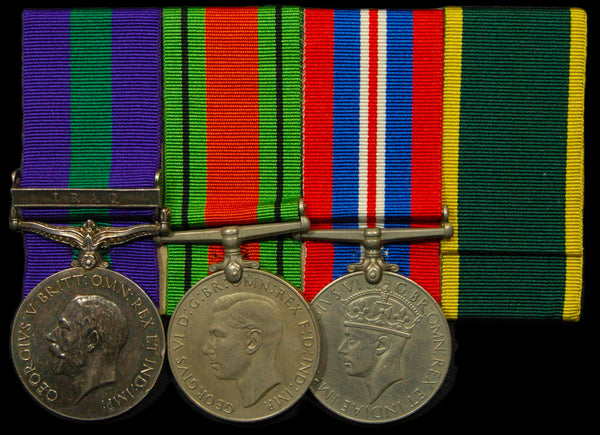
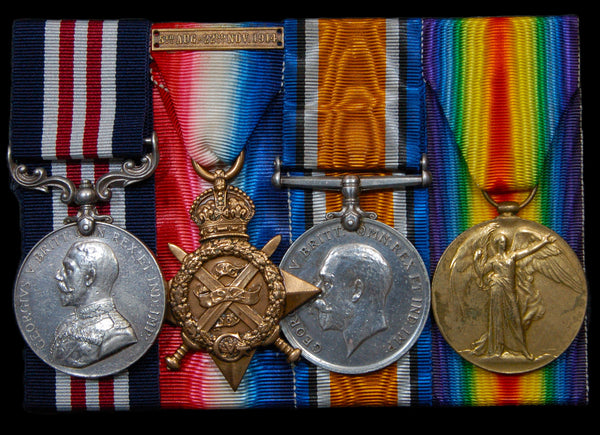
1914-15 Star (295042, W. Chessell. S.P.O. R.N.); British War and Victory Medals (295042. W. Chessell. Act. Ch. Sto. R.N.); Royal Navy L.S. & G.C., G.V.R. (295042 William Chessell Sto. Po. H.M.S. Agincourt), good very fine.
William Chessell was born at Ryde, Isle of Wight on 24 November 1881 and was a butcher's slaughterer when he enlisted in the Royal Navy as a Stoker 2nd class on 27 March 1900. He served at a number of shore and sea-based appointments and at the onset of the Great War was serving on H.M.S. Agincourt with whom he served until 6 August 1915. Shore based until 14 November 1915 he was posted to the ill-fated H.M.S. Zulu until 28 November 1916 when he was shore based until 17 January 1917.
His next appointment was to H.M.S. Llewellyn on 18 January 1917. On 17 March 1917, Llewellyn formed part of a flotilla including H.M.S. Laertes, Laforey and Paragon patrolling the Dover Barrage. German torpedo boats attacked and sank Paragon. Llewellyn, seeing gun flashes, went to attend and switched on a searchlight to assist in picking up survivors. Attracted by the light, the torpedo boats S49 and G87 attacked and launched two torpedoes, one of which struck the destroyer in the bow. By steaming backwards, the ship was able to return to port without suffering casualties. Llewellyn was subsequently redeployed to the Methil Convoy Flotilla based on the Firth of Forth. From 31 March 1917 until 17 April 1918, Chessell was shore based. Appointed Chief Stoker he was next posted to Torch serving aboard her until the end of the war. He was shore discharged on 26 March 1922.